Planning a Motorcycle Journey in Colombia: Rental Tips, Road Safety, and Smart Bike Selection

October 14, 2026 · 11 reads
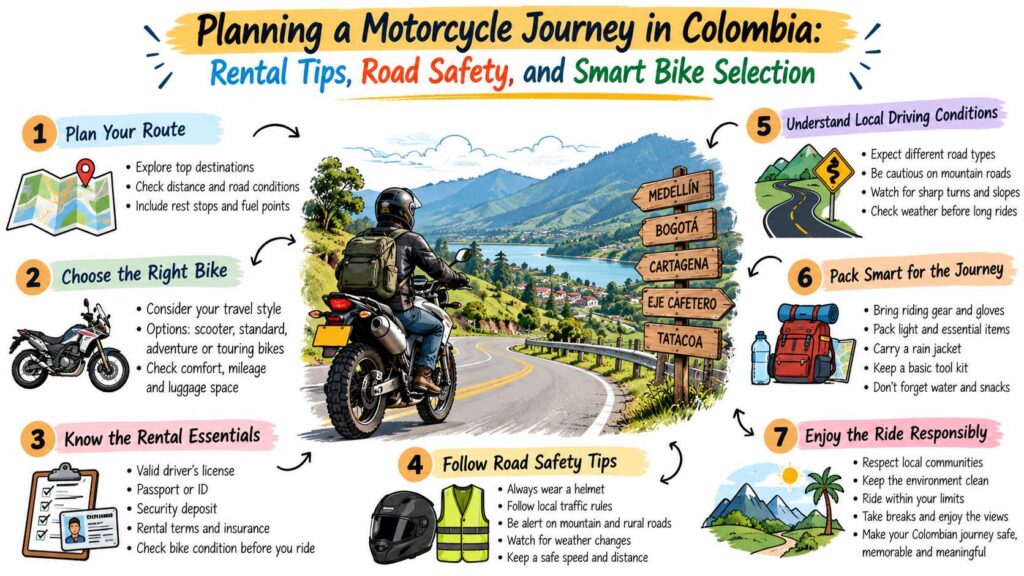
Introduction
Exploring Colombia by motorcycle can turn an ordinary trip into a more independent travel experience. You can ride through lively urban areas, visit smaller towns, and enjoy changing landscapes along the way. However, a successful journey depends on choosing a suitable bike and preparing for the conditions you may encounter.
Colombia’s roads vary widely. Some routes pass through crowded city streets, while others climb steep mountain slopes or cross rural areas with limited services. Your motorcycle should match these conditions, your riding ability, and the amount of luggage you plan to carry.
Rental decisions also involve more than the vehicle itself. Licence eligibility, insurance exclusions, deposits, fuel costs, and return conditions can affect your trip and budget.
This guide explains how to evaluate motorcycle rental options, prepare for different Colombian destinations, and manage the practical details that many travelers overlook.
Start With Your Travel Itinerary
Before comparing motorcycles, decide how you intend to travel. Your itinerary will help you identify the right vehicle, rental period, and equipment.
City Exploration
If you plan to stay within one city, prioritize easy handling, comfortable seating, and convenient parking. A smaller commuter motorcycle may meet your needs without the added weight of a touring model.
Consider the distance between your accommodation and planned attractions. If you expect frequent stops, a motorcycle that feels comfortable at low speeds may be more useful than one designed for long highway journeys.
Also consider local traffic. If you have little experience riding in crowded streets, alternative transport may offer a more suitable way to explore.
Regional Travel
Travel between towns can involve longer distances, changing elevations, and different road surfaces. You may need a motorcycle with enough performance for the planned route and enough space for essential luggage.
Review the condition of the roads before choosing your vehicle. Do not assume that every destination accessible by car will be suitable for every motorcycle.
Multi-Day Road Trips
Longer journeys require additional preparation. Consider seat comfort, fuel range, luggage capacity, maintenance support, and the time available for rest.
Avoid planning an itinerary that depends on covering long distances every day. Leave room for weather changes, roadworks, traffic, and unexpected delays.
Your route should guide your rental choice rather than forcing your route to fit a motorcycle that does not meet your needs.
Compare Motorcycle Types Before Booking
Different motorcycle categories offer different benefits. The right option depends on your experience and the conditions you expect to encounter.
Lightweight Commuter Bikes
Commuter motorcycles often suit everyday travel and short regional journeys. Their manageable size may help with parking and low-speed maneuvering.
They can be a practical choice for travelers who want basic transportation rather than specialized touring features.
However, a lightweight motorcycle may offer limited luggage capacity or less performance for certain routes. Ask the provider about the specific model instead of relying only on the category name.
Automatic Scooters
Scooters can simplify some aspects of urban riding because many models use automatic transmission. They may work well for short journeys when traffic, road conditions, and the rider’s experience permit.
Check the scooter’s engine capacity, braking system, storage, and passenger limits. Small wheels and limited ground clearance may create additional challenges on rough or uneven surfaces.
A scooter should not automatically be your first choice for mountain travel or long-distance riding.
Touring Bikes
Touring motorcycles often provide features designed for longer rides, including comfortable seating and luggage options.
They may suit experienced riders who expect to spend several hours on the road. Yet their weight and size can make slow maneuvers more demanding.
Before booking, check whether you can comfortably support the motorcycle at a stop and maneuver it in a confined space.
Adventure Motorcycles
Adventure motorcycles may suit varied routes when their specifications match the planned terrain. Some models offer useful ground clearance, upright seating, and luggage mounting options.
However, not every adventure motorcycle handles rough roads equally well. Tire type, suspension, weight, and rider skill all influence performance.
Discuss your route with the rental provider. Confirm whether the agreement permits unpaved roads and whether the motorcycle suits the expected conditions.
What to Consider in Colombia’s Major Destinations
The place where you ride can influence your motorcycle choice and daily travel plan.
Exploring Medellín
Medellín’s mountainous setting creates elevation changes around the city and its surrounding region. Riders may encounter steep roads, busy intersections, and sudden changes in weather.
For short city journeys, prioritize handling and braking over engine size. If you intend to travel into the surrounding countryside, assess the motorcycle’s comfort, luggage capacity, and suitability for longer distances.
Plan extra time for traffic and winding roads. Avoid treating navigation estimates as guaranteed arrival times.
Riding in Bogotá
Bogotá presents a different challenge because of its busy streets and high elevation. Visitors who are unfamiliar with the city may find the traffic patterns difficult to manage.
Choose a motorcycle you can control confidently. Check its brakes, tires, mirrors, and lights before entering busy areas.
If your visit focuses on museums, restaurants, and central attractions, compare the convenience of public transport and taxis before committing to a motorcycle rental.
Traveling Around Cartagena
Cartagena offers historic attractions, urban destinations, and access to nearby coastal areas. A motorcycle or scooter may suit certain local journeys.
Heat and humidity can increase fatigue, while rain can make road surfaces slippery. Wear suitable protective equipment and take breaks when necessary.
If you plan to leave the city, confirm the route and rental restrictions before departure. Do not assume that a vehicle suited to city travel will be appropriate for every coastal or rural road.
Build a Realistic Rental Budget
A motorcycle’s advertised rate represents only one part of the overall expense. Your final cost may include several additional charges.
Before confirming a booking, request a written quotation covering:
- The full rental price and payment schedule.
- The security deposit and refund conditions.
- Insurance coverage, exclusions, and deductibles.
- Mileage limits and excess-distance charges.
- Fuel requirements at collection and return.
- Helmet and protective equipment availability.
- Delivery, collection, or other service fees.
- Late-return charges.
- Damage assessment procedures.
- Cancellation and booking-change conditions.
Compare the total cost for the entire rental period. A lower daily rate may not be the most economical option if it includes strict mileage limits or excludes services you need.
Fuel costs also depend on the motorcycle, route, traffic, and riding conditions. Avoid estimating your budget from engine size alone.
For a longer trip, calculate expected daily expenses and keep a reserve for unexpected costs. This can help you avoid financial pressure if your itinerary changes.
Verify Documents and Riding Eligibility
Do not wait until collection day to check whether you can legally ride the chosen motorcycle.
Requirements may depend on Colombian regulations, your nationality, residency status, licence category, and the vehicle type. Rental providers may also impose additional eligibility conditions.
Confirm the following before booking:
- Your licence covers the intended motorcycle or scooter category.
- You understand whether an international driving permit or supporting document is required.
- The provider accepts your identity documents.
- You meet the provider’s age and experience requirements.
- You understand the accepted payment methods for the deposit.
- Your insurance arrangements cover the planned riding activity.
A standard car licence should not be assumed to authorize motorcycle use. Similarly, a booking confirmation does not establish legal eligibility.
When a requirement remains unclear, check the current rule with the appropriate Colombian authority and obtain the provider’s requirements in writing.
Inspect the Bike and Record Its Condition
A motorcycle may look clean and well maintained while still having a problem that affects its performance. Take time to inspect it before leaving the collection point.
Mechanical Checks
Examine the tires for visible damage and unusual wear. Test the brakes, indicators, headlights, brake light, horn, and mirrors.
Check the throttle and other controls. Look for obvious fluid leaks or visible damage to important components.
If something appears unsafe, ask the provider to investigate it. Do not accept a motorcycle with a serious mechanical issue.
Document Existing Damage
Walk around the motorcycle and photograph its condition. Capture scratches, dents, broken parts, and other defects from several angles.
Ask the provider to record the damage in the inspection report or rental agreement. Keep a copy of the record.
Also confirm that you have received the agreed equipment, keys, and documents.
Clarify the Return Procedure
Ask where and when you must return the motorcycle. Confirm the fuel level, cleaning expectations, equipment requirements, and late-return policy.
Find out how the provider will inspect the motorcycle and handle any disputed damage. Clear procedures can reduce confusion when your trip ends.
Understand Insurance Before You Ride
Insurance conditions deserve close attention because different policies protect against different risks.
Ask whether the rental arrangement includes protection for motorcycle damage, theft, third-party liability, and roadside assistance. Confirm the exclusions and deductible for each relevant type of coverage.
Some agreements may restrict travel outside approved areas or on certain road surfaces. They may also specify who can ride the motorcycle.
Read these terms before paying. A verbal statement about coverage should not replace the written policy.
Check your personal travel insurance as well. Some policies exclude motorcycle riding or impose conditions relating to licences, engine capacity, or protective equipment.
You should also understand the provider’s procedure after an accident or breakdown. Save the appropriate contact details and ask what expenses you may need to cover.
Prepare for Changing Road and Weather Conditions
Colombia’s terrain and climate can change considerably during a journey. Good preparation helps you respond to these differences.
Avoid Overloading Your Schedule
Plan daily distances around realistic riding times rather than straight-line distances. Allow time for traffic, steep roads, rest breaks, and unexpected delays.
Try to complete unfamiliar sections during daylight. If weather or road conditions become difficult, adjust the itinerary rather than rushing to reach your destination.
Prepare for Rain
Carry suitable rain protection and wear clothing that allows comfortable movement. Wet roads can reduce traction and make braking less predictable.
Reduce your speed when conditions deteriorate. Increase your following distance and avoid sudden changes in direction.
If visibility becomes poor, stop in a safe location until conditions improve.
Plan Fuel and Communication
Identify likely fuel stops before traveling through areas with fewer services. Refuel early when you cannot confirm the next station’s availability.
Carry drinking water and a charged phone. Save important contact details and consider offline navigation for areas with limited mobile coverage.
Share your planned route and expected arrival time with someone you trust, particularly when traveling through remote areas.
Choose Suitable Protective Gear
Wear a properly fitting helmet that meets applicable requirements. Gloves, sturdy footwear, and protective clothing can help reduce the effects of some riding hazards.
Confirm what the rental provider supplies. Bring additional equipment if the available gear does not fit correctly.
Secure luggage carefully and avoid carrying more weight than the motorcycle can safely handle.
Common Rental Mistakes That Can Disrupt Your Trip
A few preventable mistakes can create unnecessary expenses and delays.
Booking Without Checking the Route
A motorcycle that suits city traffic may not work well for a long mountain journey. Match the vehicle to the roads you intend to use and ask the provider about restrictions.
Focusing Only on the Daily Price
The advertised rate may exclude insurance options, equipment, mileage, or delivery. Compare the complete cost before deciding.
Assuming Insurance Covers Everything
Policies contain exclusions and conditions. Confirm your financial responsibility for damage, theft, and third-party claims before collecting the vehicle.
Failing to Photograph the Motorcycle
Without a record of existing damage, you may have difficulty resolving a disagreement. Photograph the bike and retain the inspection report.
Ignoring Fatigue
Long riding hours can affect attention and reaction time. Plan breaks and stop when you feel tired rather than pushing through the journey.
Returning the Vehicle Late
Late returns can trigger additional charges or disrupt the provider’s next booking. Allow time for traffic, refueling, and the return inspection.
Important Considerations Before Finalizing a Booking
Before committing to a rental, review your trip as a complete plan.
First, confirm that the motorcycle suits your experience, route, luggage, and passenger requirements. Next, verify your licence eligibility and gather the required documents.
Then compare the total price, insurance terms, deposit, mileage limits, and cancellation conditions. Make sure the agreement explains what happens if the motorcycle breaks down or suffers damage.
Check the provider’s contact arrangements and roadside support. You should know how to report a problem and what steps to follow if the vehicle becomes unusable.
Finally, consider whether a motorcycle remains the best choice for your itinerary. Some travelers may benefit from combining motorcycle travel with buses, taxis, or other transport options.
Taking these steps before booking can help you avoid unsuitable vehicles and unexpected expenses.
Frequently Asked Questions (FAQs)
1. What should I consider before renting a motorcycle in Colombia?
Review your route, riding experience, licence eligibility, total budget, insurance, and the motorcycle’s condition. Choose a vehicle that suits your actual travel needs.
2. Is a small motorcycle suitable for Colombian cities?
A smaller motorcycle may suit local journeys if it offers appropriate performance and handling. Consider traffic, slopes, road surfaces, and your riding experience before choosing.
3. Should I rent a scooter or a motorcycle?
A scooter may suit short urban trips, while a motorcycle may offer more options for certain longer journeys. Compare vehicle specifications, route conditions, and licence requirements.
4. Can tourists rent motorcycles in Medellín?
Eligibility depends on applicable rules and the rental provider’s requirements. Confirm accepted documents, licence category, age restrictions, and travel conditions before booking.
5. Is a larger motorcycle better for mountain roads?
Not necessarily. A larger motorcycle may offer more power or touring comfort, but its weight can make handling harder. Choose according to the road, load, and your experience.
6. What additional rental charges should I expect?
Possible charges include deposits, insurance, equipment, mileage, fuel, delivery, late returns, and damage. Ask for a complete written quote because provider terms vary.
7. How can I protect myself from damage disputes?
Photograph the motorcycle before departure, document existing defects, and request a written inspection report. Keep the report and agreement until the rental closes.
8. Can I take a rental motorcycle outside the city?
That depends on the provider’s agreement and the motorcycle’s suitability. Confirm permitted travel areas, mileage limits, insurance restrictions, and roadside support.
9. What protective equipment should I use?
Wear a properly fitting helmet and suitable riding clothing. Gloves and sturdy footwear are also useful. Check the applicable requirements and confirm what the rental provider supplies.
10. What happens if the motorcycle breaks down?
Contact the provider using the agreed procedure and move to a safe location if possible. Follow its instructions for repair or recovery and clarify responsibility for related costs.
11. Can I ride a rental motorcycle on rural roads?
You should first confirm that the motorcycle and rental agreement permit the route. Assess the surface, weather, fuel access, and your riding skills before proceeding.
12. How early should I book a motorcycle?
Timing depends on the destination, travel dates, motorcycle type, and provider availability. For a specific model or busy travel period, checking options early can give you more time to compare terms.
Conclusion
A successful motorcycle trip in Colombia begins with a practical decision about your route, vehicle, and personal experience. The right motorcycle should offer comfortable handling and suit the roads you intend to travel.
Compare complete rental costs, confirm licence requirements, and understand the insurance terms before paying. Inspect the vehicle carefully, record existing damage, and prepare for changes in weather and road conditions.
For longer journeys, plan realistic distances and identify fuel stops in advance. Keep emergency contacts available and adjust your plans when conditions make riding difficult.
When you are ready to compare possibilities, visit MotoShare.co and confirm current listings, rental conditions, and provider requirements. Careful preparation will help you make a more informed choice and plan a motorcycle journey that fits your needs.
Leave a Reply