A Simple Guide to Software Comparison, Reviews, and Smart Buying

September 28, 2026 · 19 reads
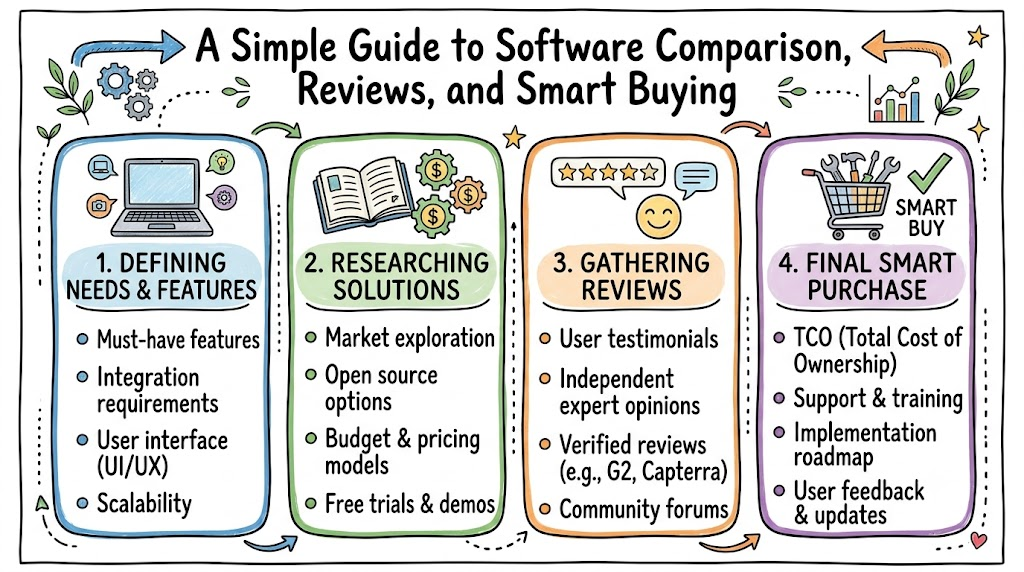
Introduction
Finding the right software can take time. Many tools solve the same problem in different ways. They may have different features, prices, plans, and limits. Some tools work well for one person. Others work better for a full team. So, users need a simple way to compare their choices. Good research can make this task easier. It can also help people avoid tools that do not fit their needs. A clear software comparison gives users useful points to check. These points include features, cost, ease of use, privacy, and support. BestAIToolix.com helps people explore software and research different options. It covers many software categories and use cases. Users can use such research to create a better shortlist.
Start With the Problem You Want to Solve
Before looking for software, define the problem first. This step can save time later. Ask what task you want the software to handle. Think about who will use it. Then, list the features that you truly need. Avoid adding features that sound useful but have little value. Also, think about your budget. A clear budget can remove poor choices early. Next, check your current tools. New software should fit your work when possible. It should not create new problems. This simple start gives your research a clear goal. It also helps you compare tools using the same points.
What Does Software Comparison Mean?
Software comparison means checking different products before choosing one. Users can compare tools by looking at the same factors. These factors may include price, features, support, and ease of use. Security and privacy may also matter. Integrations can matter for teams with many tools. An integration lets two systems work together. Users should also check if a tool fits their work style. A tool with many features may still feel hard to use. Another tool may offer fewer features but fit the task better. So, good comparison focuses on fit. It does not simply look for the tool with the most features.
| What to Check | Simple Question | Why It Helps |
|---|---|---|
| Features | Does it do what I need? | Helps solve the main task |
| Price | Can I afford it? | Helps control costs |
| Ease of use | Can my team learn it? | Saves time |
| Privacy | What happens to my data? | Helps protect information |
| Integrations | Does it work with my tools? | Keeps work connected |
| Support | Can I get help? | Helps solve issues |
| Growth | Can it meet future needs? | Supports changing needs |
Why Software Reviews Can Help
Software reviews give users another way to learn about products. A review may explain key features and common uses. It may also show limits or areas that need care. This can help users understand a product before testing it. Still, not every review gives the same type of information. Some reviews focus on personal experience. Others focus more on product facts. Readers should know the difference. They should also check product details from reliable sources. Pricing and features may change over time. So, old information may not match current plans. Reviews work best when users treat them as research material. They should not replace careful product checks.
Finding the Best Software Tools
People often search for the best software tools. But the best choice can change from person to person. A writer may need different software than a developer. A small business may need different software than a large company. Start by defining the main task. Then, write down your must-have features. Set a budget before you compare products. Check whether each tool fits your current setup. Read reviews and compare product information. Try a demo or free trial when one exists. Also, check privacy and support details. This process can help you create a useful shortlist. Your final choice should match your actual work.
Using a Software Directory for Discovery
A software directory can make early research easier. It groups software into clear categories. Users can then explore products based on their needs. They may look for project tools, cloud tools, finance tools, or marketing software. Developers may search for technical products. Business teams may search for tools for sales or HR. Users can also search by use case or feature. A directory can help people discover products they may not know. However, discovery should only be the first step. Users still need to check each product. They should review features, price, privacy, and other key details.
Exploring an AI Tools Directory
An AI tools directory helps users find AI products by task or category. AI tools can support many types of work. These areas may include writing, coding, design, research, and marketing. They may also support data work and productivity tasks. Users should start with a clear goal. For example, a team may want help with research. A developer may want help with coding tasks. A business may want support for daily work. After finding possible tools, users should compare them. They should check features, price, ease of use, and data rules. This approach can make AI research much simpler.
A Simple Way to Compare AI Tools
Many users want to compare AI tools before making a choice. Start by checking the main job of each tool. Then, look at the features that support that job. Price should also match your budget. Ease of use matters for both new and skilled users. Next, check integrations if you need other software to connect. Privacy and data handling need careful attention too. Data handling means how a provider stores and uses your data. Businesses may also need team controls and technical support. Try the tools when possible. A real test can show whether a tool fits your work. The right choice depends on your needs.
| Factor | Example | Question to Ask |
|---|---|---|
| Main use | Writing support | Does it solve my main task? |
| Features | Needed functions | Does it have what I need? |
| Cost | Monthly plan | Does the cost fit my budget? |
| Ease | Simple controls | Can users learn it quickly? |
| Privacy | Data rules | How does it handle data? |
| Integration | Other work tools | Can it connect with my tools? |
| Limits | Plan rules | What can I not do? |
How to Judge the Best AI Tools
The phrase best AI tools can mean different things to different people. A useful tool should match the user’s goal. Start by checking what the product does. Then, see who may benefit from it. Review its main features and pricing. Check its limits too. Privacy information can also matter. User feedback can show common experiences. But personal opinions can differ. So, users should not depend on one review alone. A short test can provide useful information. Users can then compare their findings with other products. This makes the final choice more balanced.
Why Businesses Need More Care
Businesses often need more checks before buying software. Business software comparison should start with company needs. Team size can affect the right product. Business goals matter as well. Security and privacy may need extra attention. Integrations can also affect daily work. Growing teams may need software that can handle more users. Cost matters too. Businesses should check both current and future costs. Support can also matter when many people use one system. Admin tools may help teams manage access. Each business has different needs. So, companies should avoid choosing software only because it looks popular.
The Value of Independent Software Reviews
Independent software reviews can give users another useful view. Good reviews should explain what a product does. They should also point out limits. Clear review methods can help readers understand the results. User feedback can add more context. Still, users should check important facts themselves. Review standards can differ across websites. Some reviews may focus on certain users or tasks. Others may focus on price or features. So, readers should understand what a review covers. They should also check if information may have changed. Good research uses several useful sources when needed.
Do Software Rankings Tell the Whole Story?
Rankings can help users build a shortlist. They can show products that meet certain rules. But rankings do not answer every question. A ranking depends on its scoring method. One list may value low cost. Another may value features or ease of use. Some rankings may target a certain user group. So, readers should check the reason behind the ranking. They should also see who the product suits. A high position does not make a product right for everyone. Use rankings as a starting point. Then, compare the products with your own needs.
A Simple Software Selection Process
Use this process when you need to choose software:
- Name the problem. Write down what you want to fix.
- List your needs. Separate must-have and nice-to-have features.
- Set your budget. Know what you can spend.
- Search for options. Use categories and use cases.
- Build a shortlist. Keep only useful choices.
- Compare features. Use the same points for each product.
- Read reviews. Look for facts and user views.
- Check pricing. Review plans and limits.
- Check privacy. Read the available data rules.
- Test the tool. Try it when possible.
- Compare your final choices. Look at the full picture.
- Choose your fit. Pick the tool that meets your needs.
This method keeps the process simple. It also reduces rushed buying decisions.
Common Software Buying Mistakes
Software research can go wrong in many simple ways. Here are common mistakes to avoid:
- Looking only at price: A cheap tool may miss key features. Compare value with cost.
- Following popularity: A famous tool may not fit your needs. Check your own goals.
- Ignoring key features: One missing feature can cause trouble. Make a must-have list.
- Skipping integrations: Your new tool may not fit your current setup. Check connections first.
- Ignoring privacy: Data rules matter for many users. Read the available privacy details.
- Forgetting team needs: A tool may suit one person but not a team. Check user needs.
- Skipping tests: Product pages cannot show every daily task. Test the tool when possible.
- Trusting every review: Reviews can include personal views. Compare opinions with facts.
- Ignoring future costs: Extra users or features may change total costs. Check all plan details.
- Buying too many tools: More tools do not always mean better work. Choose only needed tools.
What Is a Software Buying Guide?
A software buying guide gives users a clear path from research to choice. It can explain what to check before buying. Users can start with their needs. Then, they can find suitable products. Next, they can compare features and pricing. Reviews can provide extra context. Product tests can show how a tool works. Privacy checks can help users understand data rules. Users can then compare their final choices. A useful guide should support good decisions. It should not force every user toward one product. Different people have different needs.
How BestAIToolix.com Can Support Software Research
BestAIToolix.com is a software discovery, research, and comparison platform. It covers a wide range of software categories. These include AI, DevOps, cloud, cybersecurity, and observability. It also covers project tools, marketing, finance, HR, databases, and creative software. Users can explore software categories and product information. They can also research software comparisons and reviews. The platform supports research around AI tools and business software. Its content can help users understand different software choices. Users should still check current product information before buying. Pricing, features, privacy, and plans can vary by provider. Careful research should remain part of every software decision.
How to Make Your Final Choice
Your final choice should start with your real needs. First, review the problem you want to solve. Then, check your must-have features. Remove products that miss key needs. Next, compare prices and plan limits. Read useful reviews and product details. Check privacy and security information. Review integrations if your work needs them. Test the final options when possible. Then, think about long-term use. Ask whether the software can still fit your needs later. Do not choose only because a tool looks popular. Choose because it fits your work.
Simple Real-Life Examples
The examples below show how different users might approach software research. These are sample situations, not real customer stories.
- A small business: A team needs project software. It checks task features, cost, ease of use, and team access. Then, it tests a few suitable options.
- A developer: A developer needs a coding tool. The developer checks technical needs, features, price, and integrations. Then, the developer compares the final choices.
- An AI user: A user wants help with research. The user checks AI tools for the task. The user then compares price, features, privacy, and ease of use.
- A growing company: A company needs business software. It checks team size, admin needs, cost, support, privacy, and future needs.
These examples show why software choice needs a clear goal. The same product may suit one user but not another.
Frequently Asked Questions
What is software comparison?
Software comparison means checking different products before making a choice. Users compare features, price, ease of use, privacy, and support. They may also check integrations and team needs. A good comparison focuses on the user’s goal. It does not simply name one product as the winner. Different users can need different tools. So, the best choice depends on the task and user.
Why are software reviews useful?
Software reviews can help users learn more about a product. They may explain features, common uses, benefits, and limits. Some reviews may also include personal user views. Readers should separate facts from opinions. They should also check if the information remains current. Reviews work best when users combine them with product details. This approach can give users a clearer view before they decide.
What is a software directory?
A software directory groups products into useful categories. Users can search for tools based on tasks, features, or needs. This can make early software research faster. A directory can also help users discover products they did not know. However, users should not stop their research there. They should check product features, pricing, privacy, and other important details.
What is an AI tools directory?
An AI tools directory helps users discover AI products. These tools may support writing, coding, design, research, marketing, or data work. Users can search based on the task they want to complete. Then, they can compare suitable products. They should check price, features, limits, privacy, and ease of use. The right tool can vary by task and user.
How can I compare AI tools?
Start by defining your main goal. Then, find AI tools that support that goal. Compare their key features and prices. Check how easy they are to use. Also, review integrations, privacy, and data handling. Businesses may need extra team or admin features. Testing tools can also help. Choose the product that best matches your actual work.
How do I find the best software tools?
Start by identifying the problem you need to solve. Next, list your must-have features. Set a budget and search for suitable products. Create a short list of useful choices. Compare each product using the same factors. Read software reviews and check product information. Test the tools when possible. The right choice depends on your needs, not popularity alone.
What is business software comparison?
Business software comparison checks software against company needs. It may include team size, goals, features, security, privacy, cost, and support. Businesses may also need integrations and admin controls. Future growth can matter too. A good comparison starts with a clear list of business needs. Teams can then compare products against that list. This creates a more useful buying process.
What makes an independent software review useful?
A useful review should explain clear product facts. It should also discuss limits and possible concerns. A clear review method can help readers understand the review. User feedback can add another useful view. Still, readers should check important claims. Review quality can vary across sources. So, users should use reviews as part of wider research. They should not rely on one review alone.
What should I check before buying software?
Start with the main problem you want to solve. Then, check the key features you need. Review pricing and plan limits. Check ease of use and support options. Privacy and security information also matter. Look at integrations when needed. Test the product if possible. Finally, compare it with other suitable choices. This can help you avoid a poor fit.
What is a software buying guide?
A software buying guide explains how to choose software step by step. It can cover needs, research, features, pricing, reviews, and testing. It may also include privacy and security checks. The goal is to make software buying easier. A guide should help users think clearly. It should not say that one product suits everyone. Each user should make the final choice based on real needs.
How can software rankings help?
Software rankings can help users create a shortlist. They may show products that meet certain rules. But each ranking uses its own criteria. One list may focus on price. Another may focus on features or ease of use. Users should understand the ranking method first. Then, they should compare the listed products with their own needs. A ranking should support research, not replace it.
How can BestAIToolix.com help with software research?
BestAIToolix.com helps users explore software and research different products. It covers many software categories and use cases. Users can explore software comparisons, reviews, directories, and AI tools. The platform can help users begin research and build a shortlist. Users should still check current product details before buying. Provider information can change. So, careful research remains important.
Conclusion
Choosing software takes more than picking the first product you find. A clear comparison can help you understand your choices. Software reviews can show useful facts and limits. AI tools also need careful checks before use. Businesses should compare software with their own goals. Price matters, but other factors matter too. Features, privacy, ease of use, support, and integrations can affect the final choice. A good software buying guide can make this process easier. BestAIToolix.com can support software discovery and research across many categories. In the end, good software decisions come from clear needs, careful checks, and simple comparisons.
Leave a Reply