Motorcycle Rental in China: A Traveler’s Guide to Smart Booking and Safe Riding

October 15, 2026 · 3 reads
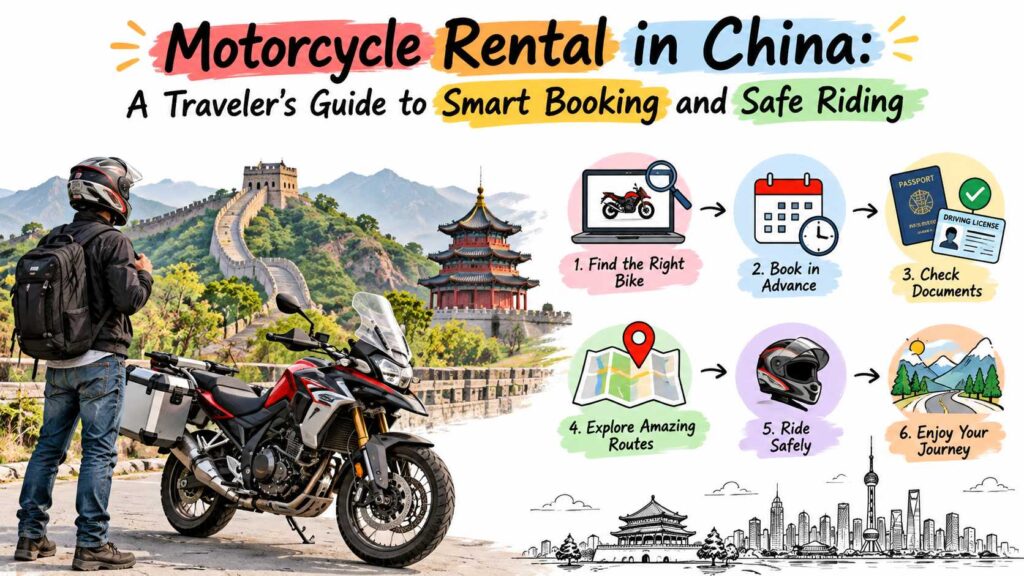
Introduction
Exploring China on two wheels can offer flexibility for travelers who enjoy independent journeys and have the right riding experience. However, arranging a motorcycle rental involves several decisions beyond selecting a model and paying the rental fee. You need to understand local driving requirements, check road restrictions, compare rental agreements, and prepare for the conditions along your route. International visitors must pay particular attention to driving authorization because foreign licences do not automatically permit motorcycle riding in mainland China. This guide explains how to evaluate rental choices, manage expenses, inspect a motorcycle, and prepare for a more informed travel experience.
What to Know Before Renting a Motorcycle in China
Motorcycle rental provides temporary use of a vehicle under conditions agreed upon with the rental provider. Depending on the provider, the process may involve identity checks, verification of driving documents, payment of a rental fee or deposit, and a vehicle inspection. The right approach depends on your destination, intended journey, riding experience, and rental period. A motorcycle suitable for a short local trip may not provide the comfort or luggage capacity required for a longer journey. Before booking, confirm the motorcycle’s availability, registration, permitted use, insurance arrangements, and return conditions.
Reasons to Consider Motorcycle Rental
A motorcycle can offer greater flexibility for riders who prefer independent travel. It may suit selected scenic routes or local journeys where other transport options do not meet their needs. However, riders must also account for limited luggage space, exposure to weather, and the greater physical risks associated with riding. Busy traffic, unfamiliar road layouts, and changing surface conditions can add difficulty. Consider these trade-offs before deciding whether a motorcycle fits your travel plans.
Who Should Consider Renting?
Motorcycle rental is best suited to people who have appropriate riding skills, meet the applicable legal requirements, and feel comfortable handling their selected vehicle. Experienced riders should still prepare for unfamiliar traffic patterns and local restrictions. Beginners should not use an unfamiliar rental motorcycle as their first riding lesson on public roads. If you cannot confirm your eligibility or control the vehicle confidently, choose another transport option until you can meet the relevant requirements.
Selecting a Motorcycle That Matches Your Journey
The right motorcycle depends on your route, riding ability, luggage, comfort needs, and expected travel time. A smaller motorcycle may suit certain short journeys, while a touring model may provide a more comfortable position for longer rides. An adventure motorcycle may work on some varied surfaces, but its design does not guarantee that every road is suitable or legally accessible. Look beyond appearance and engine size. Consider the vehicle’s weight, seat height, braking system, tire condition, luggage capacity, and maintenance history. Ask the provider for exact specifications before making a decision.
Common Motorcycle Categories
- Small-displacement motorcycles: May suit short journeys when the vehicle matches your requirements and legal eligibility.
- Standard motorcycles: May offer a balanced option for general road travel.
- Touring motorcycles: May provide a comfortable riding position and additional luggage capacity.
- Adventure motorcycles: May suit selected mixed-surface routes when the motorcycle, route, and rider skills match.
- Electric two-wheelers: Require checks of legal classification, permitted roads, charging access, and practical range.
Motorcycle Rental Comparison Table
| Motorcycle category | Potential use | Main consideration |
|---|---|---|
| Small motorcycle | Short local journeys | Legal category and handling |
| Standard motorcycle | General road travel | Weight and control familiarity |
| Touring motorcycle | Longer journeys | Comfort, luggage, and support |
| Adventure motorcycle | Selected varied routes | Road access and rider experience |
| Electric two-wheeler | Local transportation | Classification, range, and charging |
This table explains general vehicle characteristics. It does not confirm current rental availability or specific models in any Chinese city.
Driving Documents and Local Motorcycle Rules
Before booking a motorcycle in China, confirm that your driving documents authorize you to operate the exact vehicle you intend to rent. A foreign driving licence or International Driving Permit does not automatically grant permission to ride a motorcycle in mainland China. Requirements can depend on your licence category, applicable Chinese driving authorization, location, and rental provider. Do not assume that rules for passenger cars also apply to motorcycles.
Shanghai’s official guidance on temporary driving permits for rented vehicles covers small passenger cars in categories C1 and C2. That guidance does not establish permission to rent or ride a motorcycle. International visitors should verify the motorcycle-specific requirements with the relevant traffic authority before making a booking.
Documents to Confirm
- Passport or another accepted identity document.
- Valid driving licence for the required motorcycle category.
- Applicable Chinese driving authorization, where required.
- Licence translation or supporting documents, if requested.
- Rental agreement and booking confirmation.
- Accepted payment method and deposit arrangements.
- Additional documents required by the provider or insurer.
This is a preparation checklist, not a universal legal requirement. Confirm which documents apply to your circumstances before paying.
Check Road Access and City Restrictions
Motorcycle access may vary by city, district, road, and vehicle registration category. A motorcycle permitted on one road may face restrictions elsewhere. Parking rules and local traffic regulations can also affect your journey. Check the current requirements for your pickup location and planned route. Ask the provider to confirm that the vehicle can legally operate where you intend to ride. If the rules remain unclear, resolve the issue before collecting the motorcycle.
Understanding Rental Prices and Additional Expenses
The total cost of motorcycle rental depends on the vehicle, rental period, location, provider, and included services. An advertised daily rate may exclude insurance, protective equipment, mileage allowances, or other charges. Request a written quote in RMB and review the payment conditions before signing the agreement. You should also understand which charges are refundable and what happens if you cancel, return the vehicle late, or report damage.
Costs to Review Before Booking
- Rental fee: Confirm the daily, weekly, or other applicable rate.
- Security deposit: Ask how much you must pay and when the provider expects to return it.
- Insurance: Check coverage, exclusions, deductibles, and eligibility conditions.
- Fuel or charging: Confirm the expected fuel level or battery condition at return.
- Protective equipment: Ask whether the rental includes a suitable helmet and other necessary gear.
- Mileage limits: Check distance restrictions and additional mileage charges.
- Late returns: Understand the return deadline and any extra fees.
- Damage responsibility: Review how the provider records damage and determines repair costs.
- Cancellation: Check the deadline and refund conditions.
- Breakdown support: Ask about repair assistance, recovery arrangements, and possible service charges.
These are possible expense categories rather than standard charges for every rental. Confirm the actual amounts and conditions in writing.
How to Compare Rental Offers
Compare offers with similar rental periods, insurance protection, mileage allowances, and equipment. Consider the pickup location and return arrangements because additional transport can increase your overall spending. Ask for a complete price breakdown rather than relying on a headline rate. A more expensive rental may offer better value if it includes services you genuinely need, but compare the actual terms before deciding. Never assume that a low price includes comprehensive insurance or refundable deposits.
Inspecting the Motorcycle Before Pickup
A careful inspection helps you identify safety concerns and document existing damage before accepting the vehicle. Check the motorcycle in good lighting and compare it with your booking details. Ask the provider to demonstrate unfamiliar controls and explain the return procedure. Do not accept a motorcycle with serious mechanical problems simply because you have already paid a deposit.
Motorcycle Inspection Checklist
- Check the tires for visible damage and excessive wear.
- Test the brakes and confirm that the controls respond correctly.
- Inspect the headlight, indicators, brake light, mirrors, and horn.
- Look for fluid leaks, loose components, and warning lights.
- Check the chain or other drive components where applicable.
- Confirm that the required vehicle documents are present.
- Check the helmet’s fit and condition.
- Photograph existing scratches, dents, and damaged accessories.
- Record the mileage and fuel level with the provider.
- Save the provider’s contact details and breakdown instructions.
- Confirm the return time, location, and expected vehicle condition.
Keep photographs and written inspection records until the rental ends and any deposit questions have been resolved. If you discover a serious defect, request a suitable replacement or discuss your options under the rental agreement.
Planning a Motorcycle Journey in China
China offers varied riding environments, from busy urban streets to rural roads and mountainous areas. Each setting presents different challenges. Urban journeys may involve heavy traffic, delivery vehicles, frequent stops, and complex intersections. Rural routes can bring uneven surfaces, limited lighting, changing weather, and long distances between fuel stations or repair services. Plan a realistic route that matches your riding experience and allows enough time for rest.
Practical Riding Tips
- Plan your route: Identify permitted roads, fuel stops, rest areas, and overnight accommodation.
- Check the weather: Rain, fog, heat, and strong winds can affect visibility and control.
- Wear protective equipment: Use a properly fitted helmet, gloves, protective clothing, and suitable footwear.
- Maintain a safe distance: Leave enough room to respond to sudden braking or unexpected movements.
- Take regular breaks: Stop when tired instead of following an exhausting schedule.
- Carry essential documents: Keep required driving authorization and rental paperwork accessible.
- Prepare for breakdowns: Understand the provider’s repair and recovery procedures.
- Secure your luggage: Avoid overloading the motorcycle or blocking lights and controls.
- Verify road access: Check current motorcycle restrictions rather than relying only on navigation apps.
Never assume that a road shown on a map is open to every motorcycle. Confirm access before committing to a long journey, especially when crossing city boundaries or entering restricted areas.
Common Mistakes to Avoid
Booking before confirming driving eligibility can leave you unable to use the motorcycle legally. Choosing a vehicle that exceeds your ability can increase the risk of losing control. Ignoring insurance exclusions may expose you to unexpected costs after an accident. Failing to photograph existing damage can lead to disagreements at return. Reduce these risks by checking the requirements, reading the agreement, inspecting the vehicle, and keeping written records before departure.
Using MotoShare.com.cn to Research Rental Options
Travelers can use MotoShare.com.cn as a starting point for researching vehicle-rental options in China. The platform focuses on rental discovery across categories such as motorcycles, scooters, bicycles, and cars. Specific listings and availability may vary, so verify the details of any vehicle that interests you. Treat a listing as a starting point for research rather than proof that a motorcycle is available or that you qualify to ride it.
Before committing to a rental, confirm the following details directly with the provider:
- Exact motorcycle model and current availability.
- Pickup and return locations.
- Required driving documents and eligibility conditions.
- Total rental cost, deposit, and refund terms.
- Insurance coverage, exclusions, and deductibles.
- Mileage limits, fuel arrangements, and included equipment.
- Breakdown assistance and repair procedures.
- Cancellation and damage policies.
Read the rental agreement carefully and obtain clear answers before making payment. This approach helps you assess whether the rental suits your route, budget, and experience.
Frequently Asked Questions
1. Can foreign tourists rent a motorcycle in China?
Eligibility depends on the motorcycle category, driving authorization, local regulations, and rental-provider policies. Confirm that you can legally operate the specific vehicle before booking.
2. Is an International Driving Permit enough to ride a motorcycle in China?
You should not assume that an International Driving Permit automatically authorizes motorcycle riding in mainland China. Check the applicable requirements with the relevant traffic authority.
3. Can I use a temporary driving permit to rent a motorcycle?
Not necessarily. Temporary permit procedures depend on the vehicle category and location. Guidance for rented passenger cars does not establish permission to ride motorcycles, so verify the relevant requirements separately.
4. How much does motorcycle rental cost in China?
Prices vary by motorcycle type, rental duration, location, provider, and included services. Request a complete quote in RMB that covers deposits, insurance, equipment, mileage limits, and additional fees.
5. Can I rent a motorcycle in Beijing or Shanghai?
You must confirm current availability, driving eligibility, and local road restrictions. Some roads and districts restrict motorcycle access. Check the rules for your intended route before booking.
6. Which motorcycle is suitable for a long journey?
The right choice depends on your riding experience, route, luggage, and comfort requirements. A touring motorcycle may suit longer rides, while an adventure motorcycle may work on selected varied surfaces. Confirm that the vehicle and route match your abilities and needs.
7. What should I inspect before accepting a rental motorcycle?
Check the tires, brakes, lights, mirrors, controls, and visible bodywork. Confirm the required documents, photograph existing damage, and review the insurance and breakdown procedures.
8. Does motorcycle rental insurance cover every accident?
No. Coverage depends on the policy, exclusions, deductibles, driver eligibility, and circumstances of the incident. Read the terms carefully and ask the provider to clarify anything you do not understand.
9. What should I do if my rental motorcycle breaks down?
Move to a safe location if possible and contact the rental provider. Follow the agreed breakdown procedure and obtain authorization before arranging repairs that could create additional charges.
10. What should I check before booking motorcycle rental in China?
Confirm your legal eligibility, vehicle availability, total cost, insurance coverage, deposit conditions, and pickup arrangements. Also check local road restrictions and ensure the motorcycle suits your riding experience.
Final Thoughts
Motorcycle rental in China requires thoughtful preparation, especially for international travelers unfamiliar with local driving rules. Confirm your eligibility, choose a motorcycle that matches your experience, compare the complete rental cost, and inspect the vehicle before departure. Plan around traffic restrictions, weather, rest stops, and possible breakdowns. Pay particular attention to insurance exclusions, deposit refunds, and return conditions. You can begin researching options through MotoShare.com.cn and verify the details directly with the relevant provider. A careful approach helps you make informed decisions and build a practical travel plan that prioritizes legal compliance, safety, and vehicle suitability.
Leave a Reply